Est. 2026
Michelle Bachtold PA-C, MMS, CHC
Neuro Emotional Technique

Hi, I'm Michelle.
I'm passionate about the mind-body connection and about helping people pursue greater health and well-being. Through Neuro Emotional Technique (NET), I work with clients to address the effects that stress and unresolved emotional patterns can have on physical and emotional health.
My professional background as a Physician Assistant and my years of experience in healthcare have given me a deep appreciation for the complexity of health and the importance of caring for the whole person. Those experiences, along with my own personal journey and ongoing learning, have shaped the perspective I bring to my work.
I believe that healing often involves more than simply treating symptoms. My hope is to provide a compassionate space where clients feel heard, supported, and empowered on their path toward greater wellness.
I'd be honored to walk alongside you on that journey.
The Approach
About Neuro Emotional Technique (NET)
Neuro Emotional Technique (NET) is a mind-body approach designed to gently identify and release unresolved stress patterns that may be affecting your health and well-being. When these stress patterns are resolved, it can free up energy and resources within the body, allowing for greater resilience, healing, and progress in areas where you may have previously felt stuck.
Both physical and emotional stress can create physiological changes in the body. When stress responses become chronic, the nervous system may remain in a prolonged state of "fight or flight," which can contribute to a wide range of physical, mental, and emotional symptoms. These patterns often operate outside of conscious awareness, making them difficult to change through willpower alone.
NET works to identify and address these underlying stress responses, helping the body return to a more balanced state. Research on NET has demonstrated improvements in symptoms, overall well-being, and physiological measures including brain imaging findings and inflammatory markers. Many people experience meaningful relief and positive changes within just a few sessions.
How it works
During an NET session, your practitioner uses a gentle process called muscle testing to help identify unresolved stress patterns that may be contributing to physical or emotional symptoms. Once a stress response is identified, a combination of gentle acupressure, focused awareness, breathing, and specific body positioning is used to help the nervous system release and resolve the pattern. Sessions are personalized, gentle, and designed to support the body's natural ability to return to balance.
The Scope
What NET Can Help With
Because so many physical and emotional symptoms have a stress component to them, NET can be applied to almost anything. Here are some of the most common issues clients bring to a session.

Physical Pain
Known injuries or unexplained pain anywhere in the body.

Emotional Pain
Anxiety, depression, and other patterns of emotional distress.

Digestive Symptoms
Stress-driven gut complaints and chronic discomfort.

Self-Limiting Beliefs
The subconscious stories that quietly hold you back.

Feeling Stuck
Anything you can't seem to think, talk, or willpower your way out of.

Stress-Related Concerns
Helping to release unresolved stress patterns.
About
Meet Michelle
Michelle Bachtold, PA-C, MMS, CHC
I am a Physician Assistant and Health Coach with a longstanding interest in the mind-body connection and the many factors that contribute to overall health and well-being. Although much of my clinical career has been devoted to gastroenterology and liver disease, I have always been an avid learner and have sought opportunities to broaden my understanding of health and healing.
Over the years, I have been grateful for a variety of experiences that have enriched my own journey and influenced the way I think about health. These have included coursework with Dr. Daniel Amen on brain and behavior, a clinical rotation at the Amen Clinics, exposure to concepts related to prolotherapy and the body's natural healing mechanisms through the work of Dr. Ross Hauser, and brief courses exploring topics such as Cognitive Behavioral Therapy (CBT), Transactional Analysis (TA), Somatic Experiencing (SE), Internal Family Systems (IFS), and Food as Medicine. While I do not practice these modalities, they have contributed to a broader appreciation for the many factors that influence health and well-being.
More recently, I have completed certification training in SIBO (small intestinal bacterial overgrowth) and am currently pursuing certification in Functional Medicine, an approach that emphasizes personalized care and supporting the body's innate capacity for health rather than simply managing symptoms.
In 2025, I was introduced to Neuro Emotional Technique (NET), an approach that resonated deeply with me. After experiencing its potential firsthand, I was inspired to learn more and eventually enrolled in the NET certification program. I value NET's emphasis on the relationship between stress, emotions, and physical health and am grateful for the opportunity to incorporate this work into my practice.
When I'm not working with clients, I enjoy playing pickleball, preparing healthy meals, spending time outdoors, and connecting with friends and loved ones.
The Evidence
Measurable Change, Not Just a Feeling
Two illustrative findings from peer-reviewed NET research. The first shows the brain returning to a calmer state after treatment. The second shows a drop in heart-rate reactivity to a distressing cue.
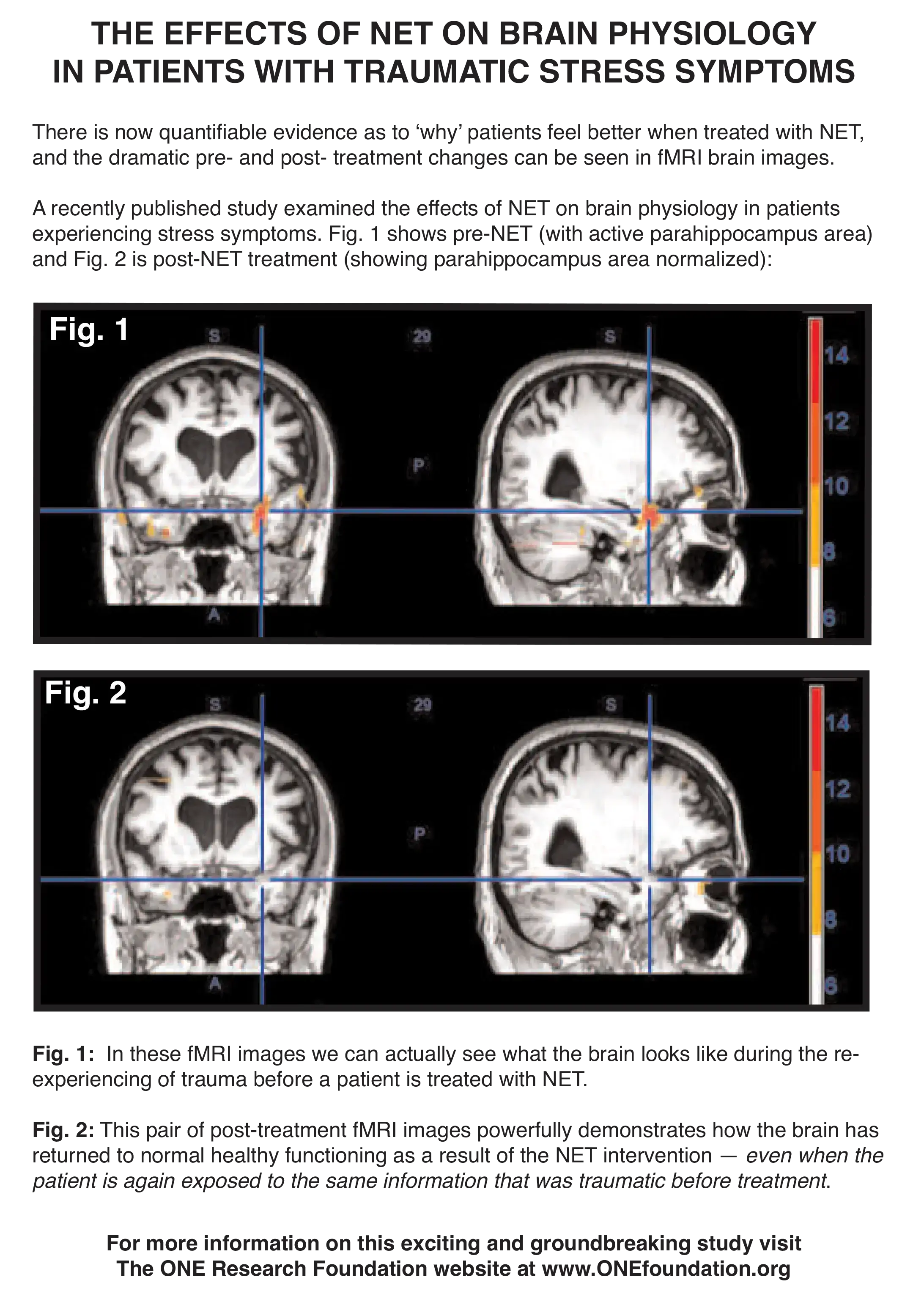
Brain Physiology
After 3-5 NET sessions, researchers observed reduced activation in brain regions involved in traumatic memory processing, including the parahippocampus. Improvements in traumatic stress symptoms accompanied these changes.
Reference: Monti DA, Tobia A, Stoner M, et al. Neuro-emotional technique effects on brain physiology in cancer patients with traumatic stress symptoms: preliminary findings. Journal of Cancer Survivorship. 2017.
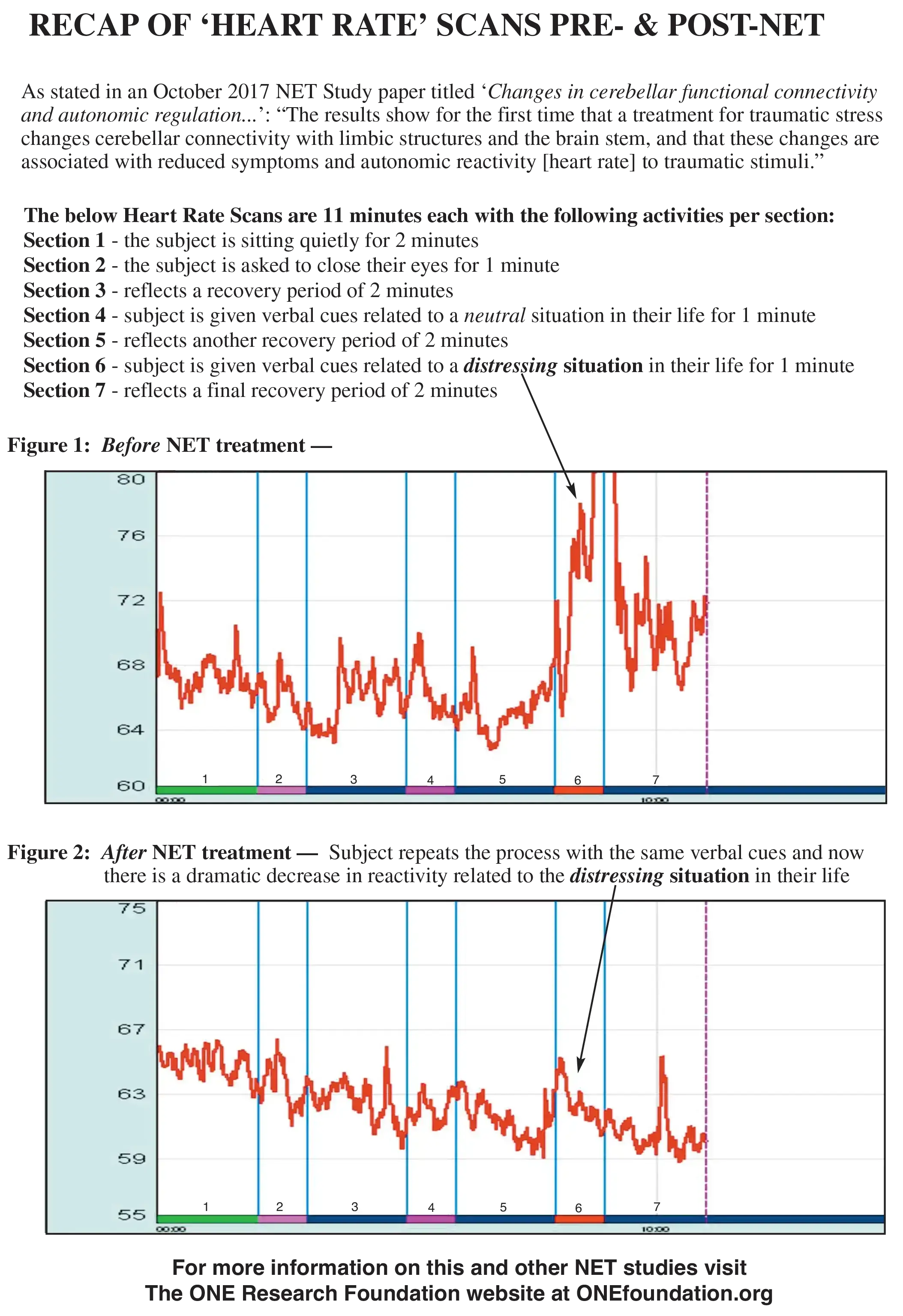
Heart-Rate Reactivity
Before NET: marked increase in heart rate during traumatic memory recall. After NET: substantially reduced heart-rate response to the same memory.
Reference: Monti DA et al. Changes in cerebellar functional connectivity and autonomic regulation in cancer patients treated with Neuro Emotional Technique for traumatic stress symptoms. J Cancer Survivorship. 2018.
For additional NET-related research, visit oneresearchfoundation.org↗.
Go Deeper
Resources & Further Reading
Learn About NET
- Brief video: background & dynamics of NET↗A short introduction to the concepts and how NET works in practice.
- netmindbody.com↗Official NET site — links to research, practitioner directory, and additional resources.
- NET Educational Videos & Demos↗YouTube channel with NET demonstrations and educational content.
- NET on Grey's Anatomy↗A pop-culture moment that introduced NET to a wider audience.
Understanding Stress
- Understanding Your Nervous System↗A brief video from the Trauma Foundation on how the autonomic nervous system regulates stress, recovery, and overall well-being.
- First Aid Stress Tool (FAST)↗A simple technique you can use on yourself in the moment.
- Wellness Check↗A guided self-assessment to see if NET may be right for you.
Common Questions
Frequently Asked Questions
What if I want to try NET but I'm not sure what to work on?
You can complete a brief online wellness check which will highlight possible areas of priority. You and your practitioner can then discuss your results. You can do that here: wellnesscheckonline.com↗.
How many sessions will I need?
The number of sessions varies from person to person and depends on your individual goals, overall health, and the concerns you would like to address.
If you are seeking support for a specific issue, some clinical studies of Neuro Emotional Technique (NET) have reported improvement after as few as 3–5 sessions for certain conditions. However, individual responses vary, and some people may benefit from additional sessions.
If you have multiple areas you would like to work on or choose to incorporate NET into your ongoing wellness routine, sessions may continue over a longer period of time. Together, we can periodically review your progress and determine a plan that best supports your goals.
Is NET covered by insurance?
Neuro Emotional Technique (NET) services are offered on a self-pay basis and are not billed to health insurance.
NET is a wellness-based, mind-body approach intended to support stress regulation and emotional well-being. It is not intended to diagnose, treat, cure, or prevent medical or psychological conditions, and it is not a substitute for medical or mental health care.
Does everyone have "stuck stress" patterns?
Many practitioners working with mind-body approaches observe that most people may carry unresolved stress patterns in the body. While emotions are a natural and important part of life, lingering or "stuck" stress responses may contribute to difficulties in physical health, emotional well-being, relationships, or overall functioning.
Why are stress patterns stored in the body?
In some cases, a stress response may not fully resolve at the time it occurs—particularly when the nervous system is overwhelmed or under significant strain. When this happens, elements of the stress response may persist in the body. NET focuses on identifying and releasing these unresolved patterns in a structured and supportive way.
Is NET a form of psychotherapy or counseling?
No. NET is not a substitute for psychotherapy, counseling, psychiatry, or psychological analysis. It is a complementary approach that focuses on identifying and resolving physiological stress patterns in the body. When appropriate, referrals to mental health professionals are recommended. Some licensed therapists and healthcare providers incorporate NET into their broader clinical work.
What is NET designed to do?
NET is designed to help identify and address unresolved stress responses—sometimes referred to as "Neuro-Emotional Complexes"—that may be stored in the body and associated with ongoing physical or emotional patterns.
What types of issues may NET be helpful for?
NET is used in a wide range of concerns where stress and emotional physiology may play a role. These may include:
- Anxiety and chronic stress
- Emotional reactivity or overwhelm
- Sleep disturbances
- Chronic pain or tension patterns
- Trauma-related stress responses
- Symptoms that have not fully responded to other approaches
- A general sense of feeling "stuck" emotionally or physically
NET is focused on addressing underlying stress patterns that may be contributing to these experiences.
What does a NET session look like? Is it talk therapy?
NET is not talk therapy. A session typically involves gentle muscle testing, light contact with specific points on the body, and guided breathing. The process is generally non-invasive and is designed to be simple and supportive. Many people report feeling lighter, calmer, or more grounded afterward.
Will I have to share private details or relive trauma?
No. NET is considered "content-light," meaning detailed disclosure is not required for the process to work. The focus is on identifying the body's stress response rather than analyzing or revisiting the details of past events. You remain in control of what you choose to share.
How can unresolved stress affect the body?
Stressful experiences trigger physiological responses involving the nervous system and biochemistry. In some cases, if a stress response is not fully processed, the body may continue to exhibit a conditioned response pattern. This can contribute to ongoing tension, discomfort, or reactivity. NET aims to help reset these patterns so the body can return to a more balanced state.
How can a "stuck" emotional response relate to physical symptoms like pain?
Emotional stress is associated with measurable physiological responses in the nervous system. When these responses persist, they may contribute to patterns such as muscle tension, inflammation, or recurring discomfort. NET works with these conditioned responses to help reduce their ongoing impact on the body.
Why are homeopathic or supportive remedies sometimes used alongside NET?
In some cases, practitioners may recommend supportive remedies as part of a broader integrative approach. These are intended to complement the body's natural recovery processes and support overall balance and well-being. Their use varies depending on practitioner style and client needs.
Can children receive NET sessions?
While NET may be used by practitioners with clients of various ages, my practice is currently focused on adults (18 years and older).
Investment
Session Fees
Complimentary phone consultation
10–15 minutes
A brief, no-cost call to answer your questions and help you decide whether NET may be a good fit.
Session Options:
50–55 minute session: $180
25–30 minute session: $95
Payment is due at the time of service. Payment methods: cash, check, and Venmo.
Fees are subject to change. Current fees will be confirmed prior to your session.
Get in Touch
Reach Out & Connect
Office & Parking
Office location:
4530 Walney Road, Suite 201B
Chantilly, VA 20151
Parking: Free on-site parking is available
Phone: 703-679-7027
Questions about NET, or curious whether it might be a fit for you? Send a note and Michelle will get back to you.
Message sent
Thanks for reaching out. Michelle will get back to you by email shortly.